How to Make a Professional Invoice (Free, No Software)
A professional invoice clearly shows who is billing whom, a unique invoice number and date, an itemized list of work with amounts, the total due, and the payment terms and method, so the client knows exactly what to pay and by when.
By Mubasher Hussain · Published 2026-07-25 · Updated 2026-10-08 · 1058 words · about 5 minute read
An invoice is the document that asks a client to pay for work done or goods supplied, and a clear, professional one gets you paid faster with fewer questions. You do not need accounting software to make one, the essential elements are simple, and the Invoice Generator builds a tidy invoice in your browser. This article explains what every invoice must contain and the details that make the difference between prompt payment and a chased, disputed one.
Freelancers, small businesses and anyone billing occasionally can produce a proper invoice in minutes once they know the components. Getting them right also matters for your own records and for tax.
What every invoice must contain
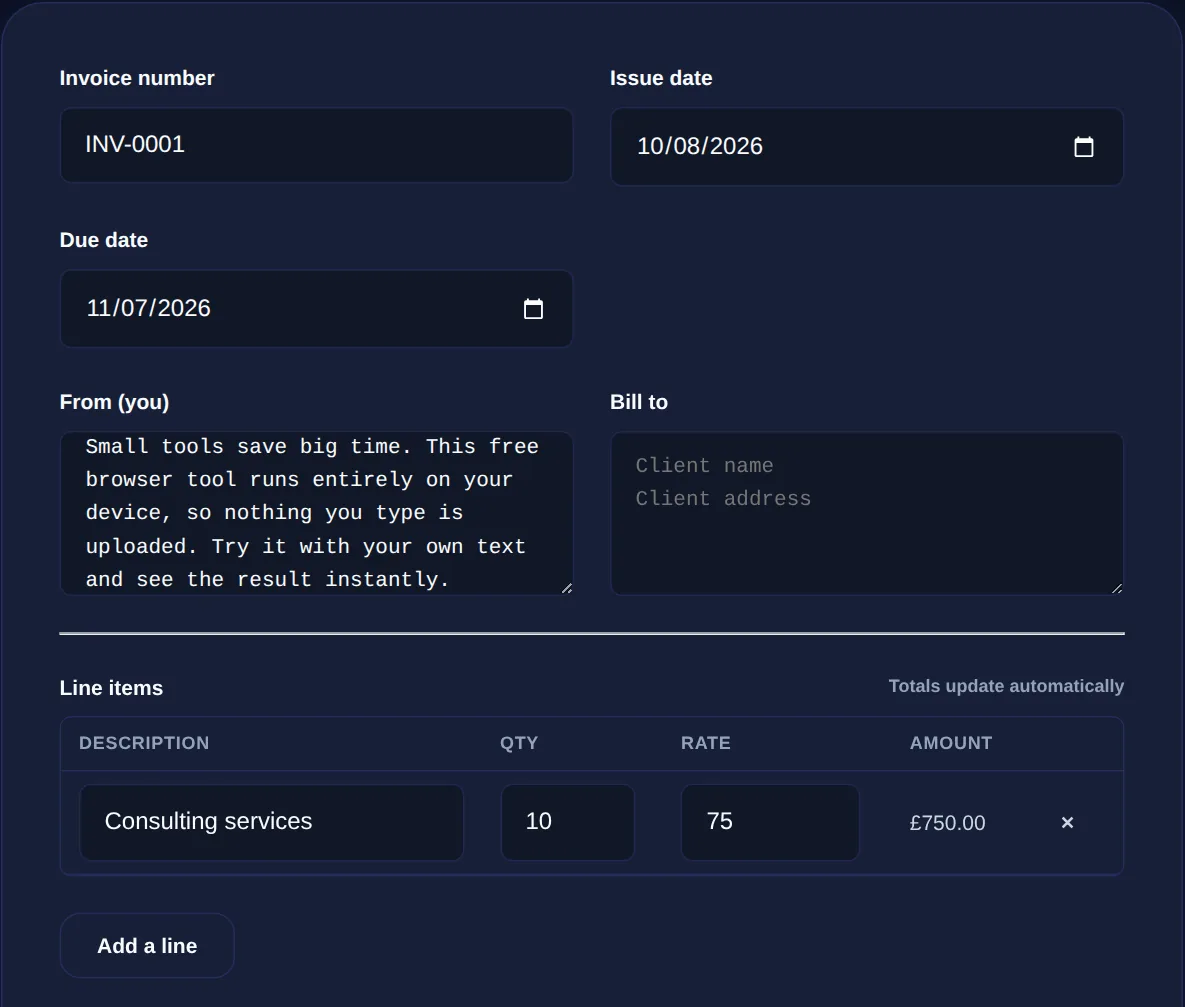
A professional invoice has a standard set of elements, and leaving any of them out invites delay or dispute:
- The word "Invoice" and a unique invoice number.
- Your details: name or business name, address and contact information.
- The client's details: who is being billed.
- The date issued and the payment due date.
- An itemised list of goods or services, with quantities and unit prices.
- The totals: subtotal, any tax, and the final amount due.
- Payment terms and methods: how and by when to pay.
Together these answer every question a client needs to pay: who is charging, who is charged, for what, how much, and by when. An invoice missing the due date or payment method simply gives the payer an excuse to delay.
Why the invoice number matters
Every invoice should carry a unique number, and this is more than a formality. Invoice numbers let you and your client refer to a specific bill unambiguously, "payment for invoice 2026-014" is clear where "that invoice from last month" is not. They are essential for your bookkeeping, letting you track which invoices are paid and which are outstanding, and they are usually a legal requirement for tax records. A simple sequential or date-based scheme works well; the key is that no two invoices share a number and that the sequence is easy to follow.
"Payment due within 14 days" with a specific date and a clear method removes ambiguity and gives you a firm footing to follow up. Vague or missing terms are one of the main reasons invoices are paid late.
Getting the numbers right
The financial part of an invoice must add up exactly, because errors here cause disputes and delays. List each item with its quantity and unit price, multiply to get line totals, sum them for the subtotal, add any applicable tax, and show the final total prominently. If tax applies, calculating it correctly matters, a percentage calculator helps you work out the tax amount accurately. When billing an international client, be clear about the currency, and a currency converter helps you and the client understand the amount in familiar terms.
Presentation and professionalism
How an invoice looks affects how seriously it is taken and how quickly it is paid. A clean, consistent layout with your name or logo signals professionalism and makes the document easy to read. Grouping the information logically, your details and the client's at the top, the itemised charges in the middle, the total and payment terms clearly at the bottom, helps the payer find what they need. Adding a signature with a signature generator can lend a personal, finished touch to letters and invoices where appropriate.
Create a clean, professional invoice with itemised charges and totals, entirely in your browser. Your financial details are never uploaded.
Keeping records and following up
Once sent, an invoice is also a record. Keep a copy of every invoice you issue, organised by number, both for chasing unpaid ones and for your tax return. If a payment is late, the unique number and clear due date give you a concrete, professional basis to follow up: a polite reminder referencing the specific invoice and its overdue date is far more effective than a vague nudge. Because the generator runs in your browser, your invoices, which contain your financial details and your clients', are created privately on your own device, with nothing uploaded to a third-party service.
Common invoicing mistakes to avoid
A handful of recurring mistakes turn otherwise good invoices into slow-paying or disputed ones, and they are all easy to avoid once you know them. The most frequent is a missing or unclear due date: "payment on receipt" or no date at all leaves the client to decide when to pay, which usually means later than you would like. State a specific date. Another is vague line items, "consulting services, $2,000" invites questions, where "consulting services, 20 hours at $100, June 1-15" does not. The more precisely each charge is described, the fewer queries delay payment.
Other common slips include forgetting your payment details, so the client has to ask how to pay; inconsistent or duplicated invoice numbers, which confuse your records and theirs; and arithmetic errors in the totals, which undermine confidence and can require a corrected invoice. Tax handling is another frequent trouble spot, applying the wrong rate, or failing to show the tax separately where it is required. Finally, sending an invoice to the wrong contact, rather than the person who actually processes payments, can leave it sitting unread for weeks. Running through a simple checklist before sending, unique number, both parties' details, specific dates, itemised charges, correct totals and tax, clear payment method, right recipient, catches all of these in seconds. A little care at the point of issue is what turns invoicing from a source of chasing and friction into a smooth, predictable part of getting paid.
In summary, a professional invoice contains a unique number, both parties' details, dates, an itemised list of charges, clear totals including any tax, and unambiguous payment terms. The invoice number underpins your records and tax compliance, clear terms get you paid faster, and correct arithmetic prevents disputes. You need no special software, just the right elements, a tidy layout, and a habit of keeping every invoice on file. Get those right and invoicing becomes a quick, reliable part of getting paid for your work.