How Loan Repayments Work: Understanding Amortization
With an amortizing loan, every payment is the same size but its split changes over time: early payments are mostly interest and little principal, and later payments are mostly principal, which is why paying extra early saves the most interest.
By Mubasher Hussain · Published 2026-08-01 · Updated 2026-10-08 · 1131 words · about 5 minute read
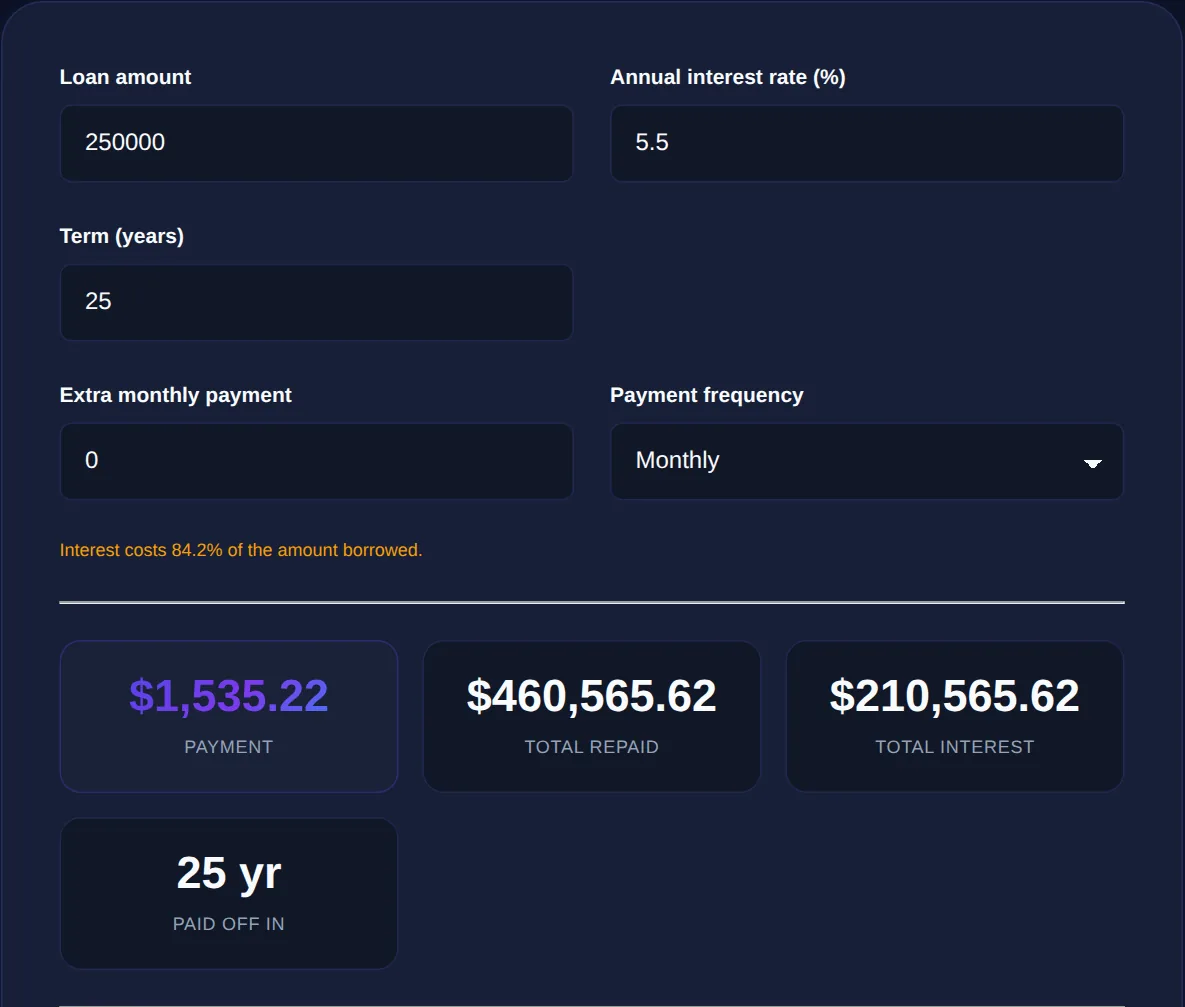
When you take out a loan, a mortgage, a car loan, a personal loan, you usually repay it in equal monthly instalments over a fixed term. The process that turns a loan amount, an interest rate and a term into that single monthly figure is called amortization, and understanding it explains some things that surprise borrowers, like why early payments barely dent the balance. The Loan Calculator works out the numbers, and this article explains what is happening behind them. This is general information, not financial advice.
Amortization is simply the schedule by which a loan is paid off. Each equal payment covers the interest that has built up since the last one, and whatever is left over reduces the amount you still owe. That split between interest and principal is the heart of how loans work.
Why each payment is split two ways
Every monthly payment does two jobs: it pays the interest charged on the outstanding balance for that month, and it repays a slice of the principal, the original amount borrowed. Interest is calculated on what you still owe, so at the start of a loan, when the balance is at its highest, the interest portion of each payment is large and the principal portion is small. As the balance falls, the monthly interest shrinks and more of each fixed payment goes toward principal. The total payment stays the same each month, but its internal split shifts steadily from mostly-interest to mostly-principal.
Why early payments feel like they do nothing
This front-loading of interest is why the balance seems to barely move in the early years of a long loan. On a typical long-term mortgage, the first payments might be overwhelmingly interest with only a sliver going to principal, so the amount owed drops slowly at first. It is not that the payments are wasted, they are covering the substantial interest on a large balance, but it does mean progress on the principal starts slow and accelerates over time. Seeing the full amortization schedule, payment by payment, makes this pattern clear.
Because interest is only charged on the outstanding balance, an extra payment reduces that balance directly and saves all the future interest that balance would have generated. Overpaying early in a loan, when the balance is highest, has the biggest effect on total interest.
What drives the total cost
Three numbers determine both the monthly payment and the total you will pay over the life of the loan:
- The amount borrowed: larger loans mean larger payments and more total interest.
- The interest rate: even a small difference in rate changes the total cost substantially over a long term.
- The term: a longer term lowers the monthly payment but increases the total interest paid, because you owe money for longer.
The term trade-off surprises people: stretching a loan over more years makes each payment more affordable but can dramatically increase the total interest, because interest accrues over the whole life of the debt. A calculator lets you compare terms side by side and see that total, not just the monthly figure.
Comparing loans properly
When comparing loan offers, the monthly payment alone can mislead, because a lower monthly figure often just means a longer term and more total interest. Look at the total amount repaid and the interest rate together. The advertised rate matters, but so do fees and how the rate is expressed, which is why a standardised figure that bundles rate and mandatory fees is useful for comparison. Working through the numbers with a loan calculator for each offer, on the same amount and term, reveals the true difference.
See the monthly payment, total interest and amortization for any loan amount, rate and term, entirely in your browser. Your figures are never uploaded.
Loans and the wider picture of interest
A loan is compound interest working against you rather than for you: the interest you do not pay off can itself accrue, which is why understanding compound interest helps you see the full cost of borrowing. The rate itself is a percentage, so a percentage calculator helps you sanity-check figures. Seeing borrowing and saving as two sides of the same compounding coin is one of the most useful financial insights there is.
Fixed versus variable rates
One decision shapes a loan as much as its amount or term: whether the interest rate is fixed or variable. A fixed rate stays the same for the whole term (or an agreed initial period), so your monthly payment is predictable and unaffected by what happens in the wider economy. A variable rate moves up or down as a reference rate changes, so your payment can rise or fall over time. The trade-off is certainty versus potential saving: a fixed rate protects you from rate rises but means you do not benefit if rates fall, while a variable rate can be cheaper when rates are low but exposes you to increases.
This matters because a rate change on a large, long loan can alter the monthly payment significantly, and over a long term even a modest rise compounds into a lot of extra interest. Which is better depends on your circumstances, your tolerance for uncertainty, and where interest rates are heading, none of which a calculator can decide for you. What a calculator can do is show you the impact: by running the numbers at different rates, you can see how much your payment and total cost would change if a variable rate moved, which helps you judge whether you could comfortably absorb an increase. Treating this as information to inform your own decision, rather than as advice, is the right frame. The broader point is that the headline rate is only part of the story; how that rate can change over the life of the loan is just as important to the true cost, and it is worth understanding before you commit.
To recap: loan repayments are structured by amortization, where each equal payment covers the month's interest first and reduces the principal with the rest. Because interest is charged on the outstanding balance, early payments are mostly interest and the balance falls slowly at first, which also means extra early payments save the most. The amount, rate and term together set both the monthly figure and the total cost, and comparing loans on total repaid rather than monthly payment alone is what reveals the better deal. Understanding this, as general information rather than financial advice, puts you in a far stronger position whenever you borrow.